Step 1
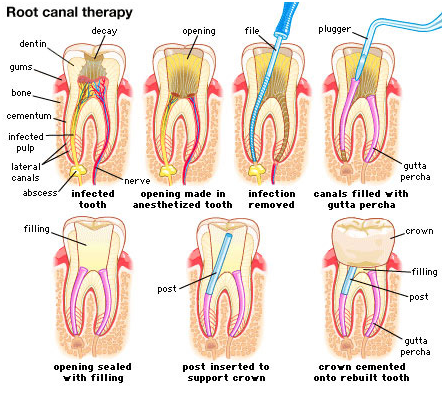
Local anesthesia is administered via injections to numb the tooth to be treated and the surrounding tissues.
Step 2
Dental dam in place, used to isolate infected tooth from the rest of mouth.
Step 3
An access hole is drilled through the biting surface of an affected back tooth or from behind a front tooth, allowing access to the pulp chamber and root canals for treatment.
Step 4
The diseased and dead pulp tissue is removed from the tooth with specially designed instruments. This is painless as the area is numb.
Step 5
The canals are disinfected with antiseptic and antibacterial solutions during the whole procedure.
Step 6
The canals are then shaped with very small flexible instruments to allow them to receive root canal fillings and sealers.
Step 7
A very biocompatible rubber-like material called gutta-percha is used to fill the canal space in addition sealer. Several technique to deliver the gutta-percha and sealer into the root canal.
Step 8
A temporary or permanent filling material will then be placed to seal the access hole that was made to treat the canals.
Step 9
According to many studies it is recommended to place direct or indirect permanent restoration with cuspal coverage after root canal treatment to assure full protection of the root canal treated tooth and avoid any bacterial reinfection.